

After an accident, many people expect the insurance process to be straightforward.
You report the accident.
You explain what happened.
You provide your bills.
The insurance company reviews everything.
A decision follows.
Sometimes the process feels simple.
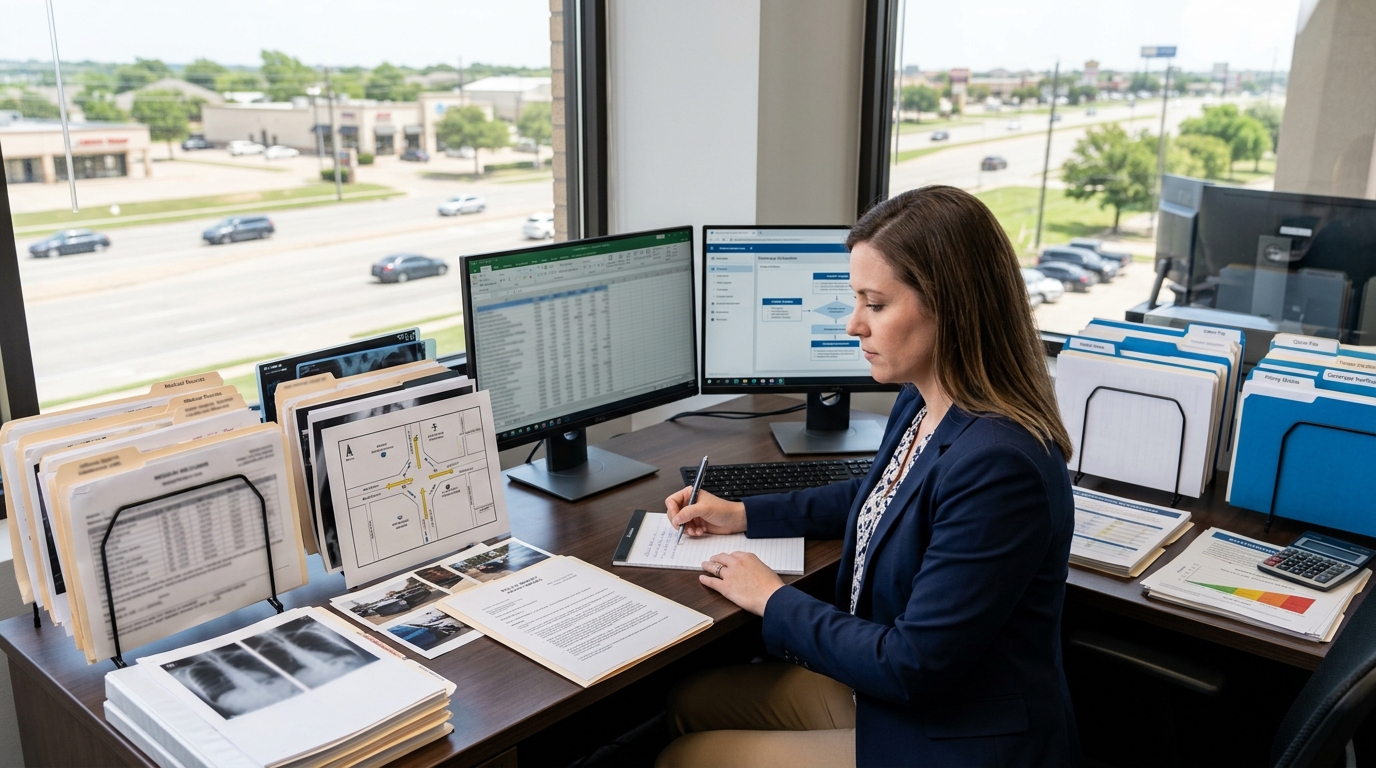
Other times, injured people discover that insurance evaluation involves many moving parts.
Insurance companies typically review several questions before deciding how to handle a claim:
- What caused the accident?
- Who may be responsible?
- How serious are the injuries?
- What treatment was required?
- What financial losses occurred?
- What insurance coverage applies?
- Does the available evidence support the claim?
Understanding this process can help Arlington injury victims know what information matters and why documentation is important.
An insurance claim is not only about the accident itself.
It is about building a complete picture of what happened before, during, and after the injury.
Quick Answer
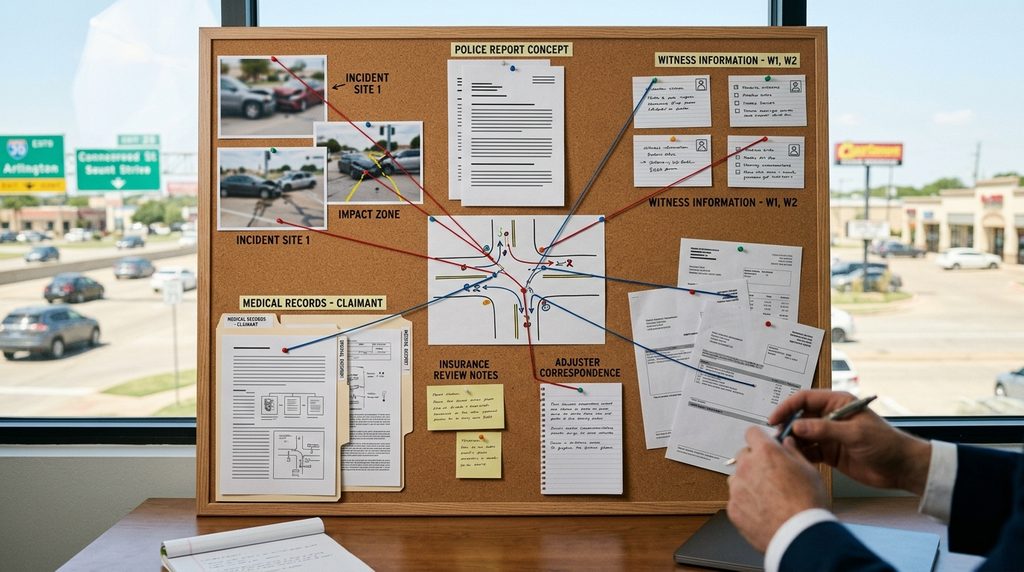
Insurance companies generally evaluate Arlington injury claims by reviewing:
- Accident reports
- Photos and videos
- Statements from drivers and witnesses
- Medical records
- Medical bills
- Treatment history
- Lost income information
- Property damage
- Insurance policies
- Evidence related to responsibility
The exact evaluation process depends on the type of accident and the available evidence.
Key Takeaways
- Insurance companies usually evaluate both liability and damages.
- Evidence helps explain how an accident happened.
- Medical documentation helps connect injuries to the accident.
- Financial records help show the impact of the injury.
- Texas comparative responsibility rules can affect recovery when multiple parties share fault.
- Insurance adjusters review claims based on available information.
- Organized documentation can make the claim process easier to understand.
- Serious injuries or disputed claims may require additional guidance.
The First Review: Understanding The Accident
Before an insurance company evaluates compensation, it usually needs to understand the event itself.
The adjuster may review:
- Where the accident happened
- When it happened
- How the vehicles or parties were positioned
- What actions occurred before the incident
- Whether traffic rules or safety duties were involved
Evidence may include:
- Police reports
- Accident photographs
- Video footage
- Witness statements
- Vehicle damage
- Scene documentation
The goal is to understand the sequence of events.
A claim generally becomes easier to evaluate when the evidence creates a clear timeline.
Liability Evaluation: Who Was Responsible?
One of the biggest questions in any injury claim is responsibility.
Insurance companies may analyze:
- Driver actions
- Property conditions
- Safety responsibilities
- Statements from involved parties
- Physical evidence
For example:
Intersection Accident
The review may involve:
- Traffic signals
- Right-of-way
- Turning movements
- Witness observations
Rear-End Collision
The review may involve:
- Vehicle positions
- Following distance
- Traffic conditions
Premises Injury
The review may involve:
- Property ownership
- Safety procedures
- Whether a dangerous condition existed
The first version of events is important.
But insurance decisions are usually based on comparing statements with available evidence.
Texas Comparative Responsibility Can Affect Claims
Texas follows a modified comparative responsibility system.
Under Texas Civil Practice and Remedies Code Chapter 33, damages may be reduced according to the percentage of responsibility assigned to each party.
This means an insurance evaluation may consider more than:
“Who caused the accident?”
It may also consider:
“Did anyone else contribute?”
For example:
A driver claims another vehicle caused a collision.
The other driver argues the first driver also made a mistake.
Evidence may determine whether:
- One person was responsible
- Multiple people shared responsibility
- The percentage of fault should be divided
This is one reason evidence matters so much.
Medical Records Help Insurance Companies Evaluate Injuries
After reviewing what happened, insurers typically examine the injury side of the claim.
They may look at:
- Diagnosis
- Treatment
- Medical expenses
- Recovery progress
- Future medical recommendations
Medical records can help answer:
- When did symptoms begin?
- What injuries were diagnosed?
- What treatment was provided?
- Did the condition improve?
- Is additional care expected?
A medical bill shows the cost.
A medical record explains the reason behind the cost.
Both may be important.
Why The Medical Timeline Matters
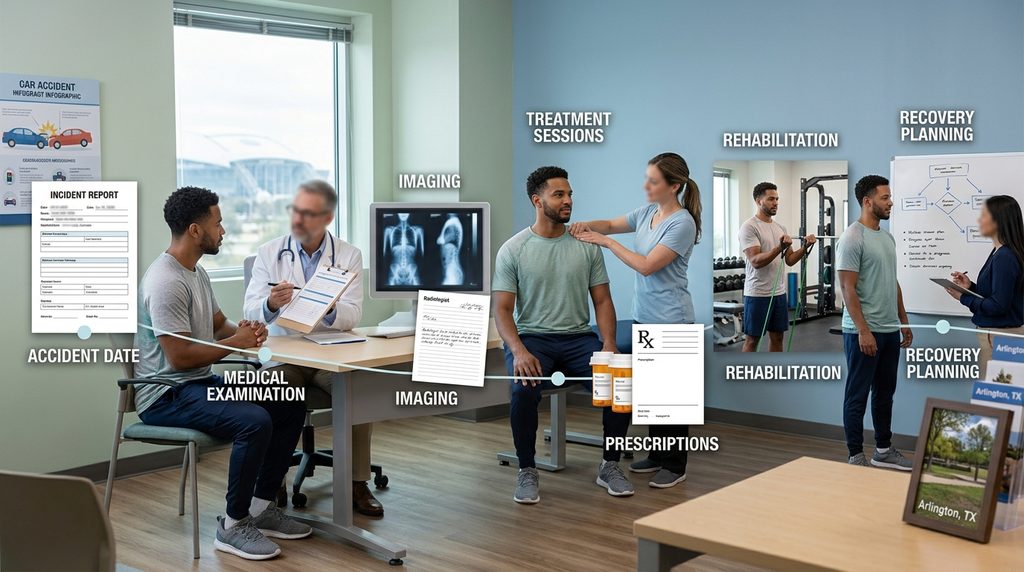
Insurance companies often examine the relationship between the accident and the injury.
A clear timeline may look like:
Accident occurs
↓
Symptoms appear
↓
Medical evaluation
↓
Diagnosis
↓
Treatment
↓
Recovery or continued care
This timeline helps explain how the injury developed.
A delay in treatment does not automatically mean an injury is unrelated.
People may delay care because of:
- Shock after an accident
- Financial concerns
- Symptoms appearing gradually
- Difficulty scheduling appointments
However, unexplained gaps can create questions during claim evaluation.
Insurance Companies Review Financial Losses
An injury can create losses beyond medical expenses.
Insurance evaluations may consider:
Medical Costs
Including:
- Emergency treatment
- Doctor visits
- Therapy
- Medication
- Specialist care
Lost Income
Including:
- Missed work
- Reduced hours
- Lost overtime
- Reduced earning ability
Property-Related Costs
Including:
- Vehicle repairs
- Replacement costs
- Transportation expenses
Personal Impact
Including:
- Activity limitations
- Changes in daily routines
- Reduced quality of life
The specific losses considered depend on the facts of the claim.
Property Damage Is Only One Part Of The Claim
After an accident, people often focus on vehicle damage.
That makes sense.
A damaged vehicle is visible.
But an injury claim involves more than the condition of the car.
A vehicle can have limited visible damage while someone experiences significant symptoms.
A severely damaged vehicle does not automatically prove severe injuries.
Insurance companies typically evaluate the available evidence as a whole.
Insurance Coverage Is Another Review Layer
Even when responsibility and injuries are clear, coverage issues may matter.
Insurance companies may review:
- Which policy applies
- Coverage limits
- The insured parties
- Other available coverage
- Whether additional policies may apply
Coverage questions can become important when:
- The at-fault driver has limited insurance
- Multiple vehicles are involved
- Injuries are significant
- Commercial vehicles are involved
A claim depends not only on what happened but also on what insurance protection exists.
Evidence Connects The Claim Story
A strong injury claim usually connects three major areas:
What Happened
Evidence may include:
- Photos
- Reports
- Witness information
- Video
What Injuries Occurred
Evidence may include:
- Medical records
- Treatment history
- Doctor opinions
What Losses Resulted
Evidence may include:
- Bills
- Employment records
- Expense documentation
Insurance companies evaluate the relationship between these pieces.
The clearer the connection, the easier it may be to understand the impact of the accident.
How Adjusters Evaluate Settlement Offers
A settlement decision is usually based on the information available during the review.
Insurance companies may consider:
- Liability assessment
- Medical documentation
- Financial losses
- Coverage limits
- Supporting evidence
A settlement offer may change as additional information becomes available.
For example:
Early in the process, the insurer may know:
- The accident happened.
- Some medical treatment occurred.
- Vehicle damage exists.
Later, the insurer may learn:
- More treatment was needed.
- Recovery took longer.
- Work limitations developed.
- Future care may be necessary.
The full impact of an injury may not always be clear immediately.
Why Quick Settlement Offers Require Careful Review
After an accident, an insurance company may contact you quickly.
A fast response can feel reassuring.
However, before accepting a settlement, it is important to understand:
- What losses are included
- Whether future treatment is known
- Whether the agreement resolves the claim permanently
A settlement may close the claim.
Understanding the terms before agreeing is important.
Insurance Companies Look For Consistency
Claims are often easier to evaluate when the information tells the same story.
For example:
Accident report:
A collision occurred at a specific location.
Medical records:
Symptoms began after the collision.
Employment records:
The injury affected work.
Daily records:
The injury affected normal activities.
These pieces support each other.
Inconsistencies may create questions.
The goal is accuracy.
Not exaggeration.
Not minimizing.
Simply documenting what happened.
Social Media May Become Part Of The Picture
Many people share parts of their lives online.
After an accident, posts may be reviewed by insurance companies.
A single photograph may not show the complete reality of someone’s recovery.
For example:
Someone may attend a family event but still experience:
- Pain
- Limited mobility
- Difficulty completing daily activities
Context matters.
Think carefully before posting about an accident or injury.
Preserve Evidence Before It Disappears
Some evidence exists only temporarily.
Examples:
- Surveillance footage
- Vehicle condition
- Witness memories
- Accident scene conditions
A nearby business camera may capture a collision.
But the footage may later be deleted.
A vehicle may be repaired.
A witness may become difficult to locate.
Early preservation can help maintain important information.
Common Mistakes That Can Affect A Claim
Not Documenting Injuries
Medical records help explain what happened.
Losing Important Records
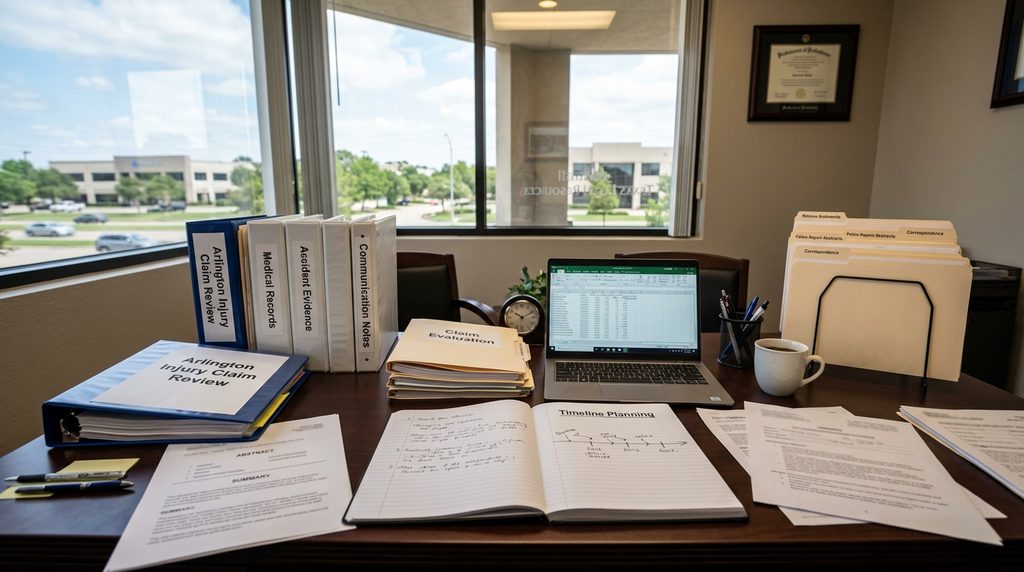
Keep accident-related documents organized.
Guessing About Fault
The complete picture may require investigation.
Accepting A Settlement Without Understanding It
A settlement can permanently resolve a claim.
Failing To Track Expenses
Small costs can become important parts of the claim.
Arlington Injury Claims May Involve Local Circumstances
Every injury claim has its own details.
Arlington accidents may occur in different settings:
- Busy intersections
- Residential areas
- Commercial locations
- Highway connections
- Entertainment districts
The location can affect:
- Available evidence
- Witnesses
- Traffic patterns
- Accident reconstruction
However, the evidence determines responsibility.
When An Arlington Injury Claim May Need Legal Guidance
Not every injury claim requires an attorney.
Some situations may be resolved through normal insurance processes.
However, legal guidance may be useful when:
- Injuries are serious
- Liability is disputed
- Insurance denies responsibility
- Medical treatment continues
- Future losses are possible
- Multiple parties are involved
- The settlement offer does not reflect the impact of the injury
A personal injury lawyer arlington can help explain how evidence, insurance, responsibility, and damages may apply.
FAQ
Insurance companies review available evidence, including reports, statements, photographs, witness information, and other details surrounding the accident.
Insurers may review medical records, bills, treatment history, diagnoses, and information about recovery or future care needs.
Yes. Texas comparative responsibility rules can reduce damages based on the percentage of responsibility assigned to each party.
Before accepting a settlement, consider whether you understand your injuries, future needs, losses, and what rights the agreement resolves.
Evidence may include accident reports, photos, videos, witness information, medical records, financial documents, and records showing how the injury affected daily life.
Final Thoughts
Insurance companies evaluate injury claims by looking at the entire story.
The accident is only the beginning.
A complete evaluation considers:
- What happened
- Who was responsible
- What injuries occurred
- What treatment was needed
- What losses followed
- What coverage applies
For Arlington injury victims, strong documentation can make the claim easier to understand.
Keep records.
Document changes.
Follow medical recommendations.
Understand your options.
The goal is not simply submitting information.
The goal is creating a clear picture of how the accident affected your life.
For local directions and contact information, the Thompson Law Arlington profile provides a local starting point.